|


256-bit encryption
$500,000 protection

|
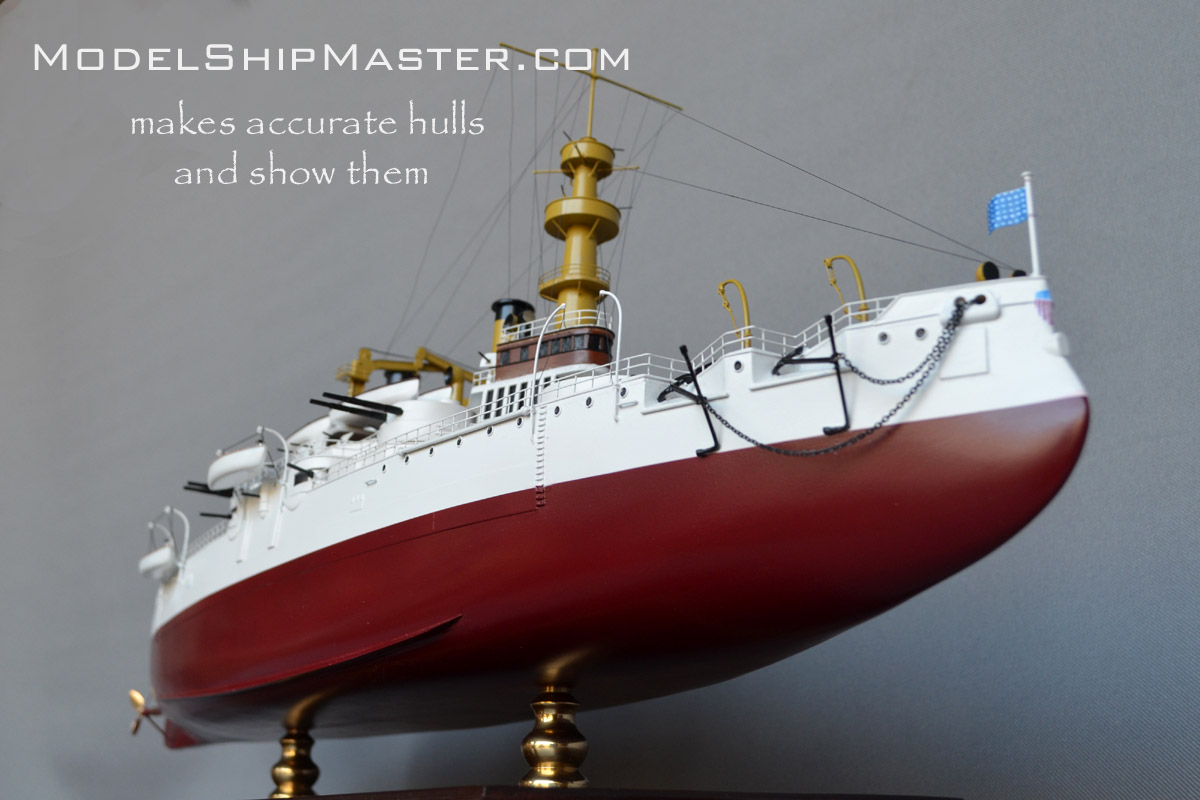
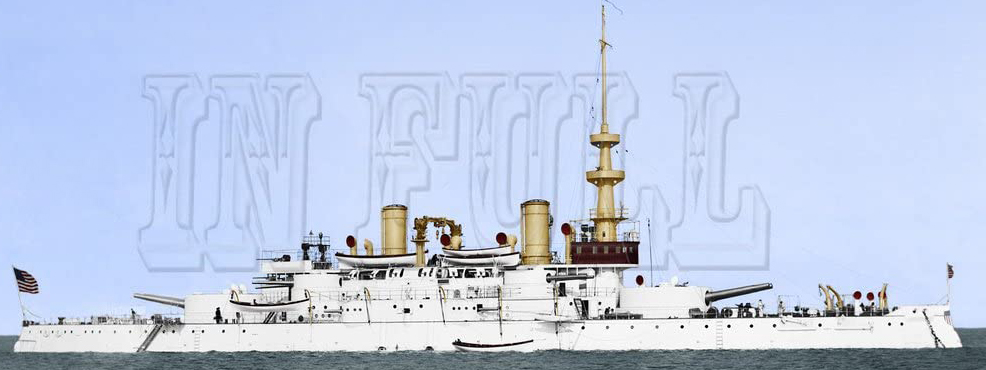
USS OREGON BB-3 battleship model
The ship
that starts the creation of the world's most powerful
navy
A copy of our model
has been purchased by the Navy Operational Support Center in
Portland, OR to be displayed near the real USS Oregon's anchor.
"The
Oregon looks great
and was shipped 100% intact we love it THANK YOU!!!!
Kurtis Patterson
Navy Operational Support Center,
Portland, OR"
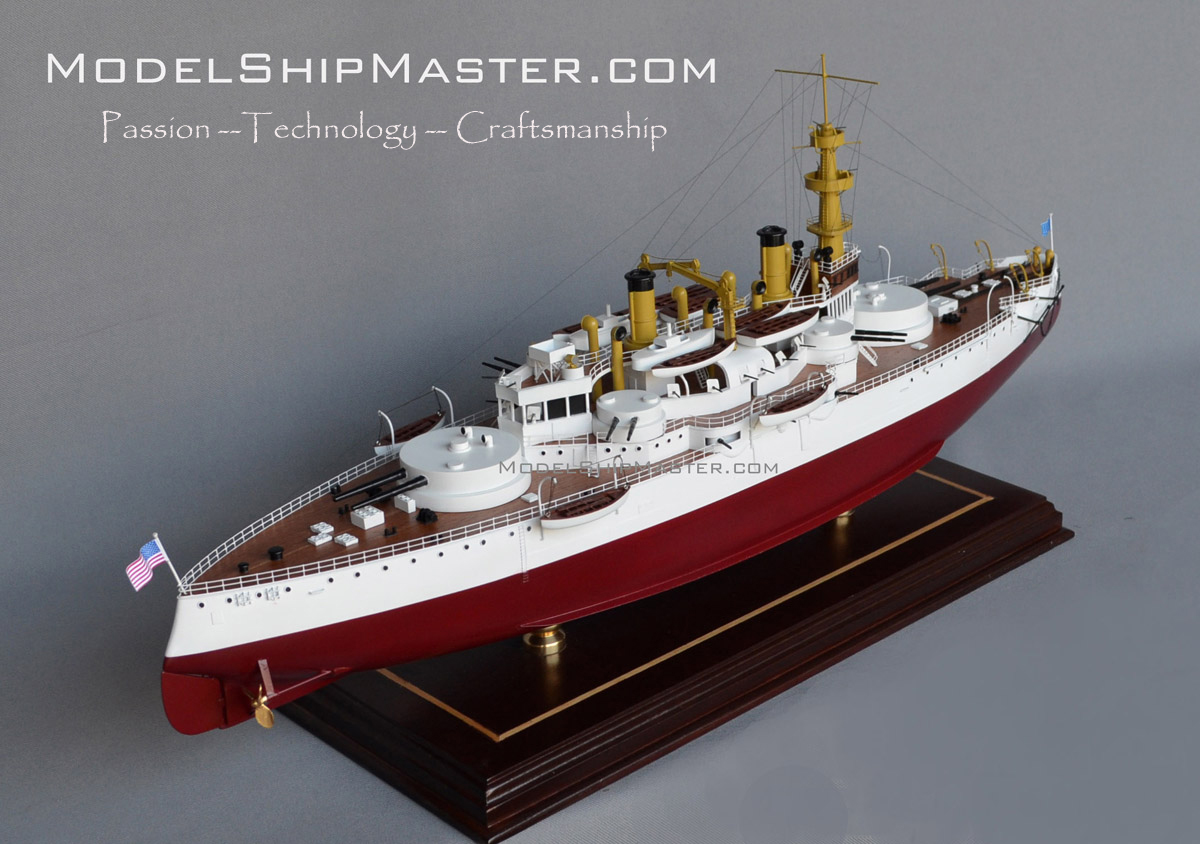
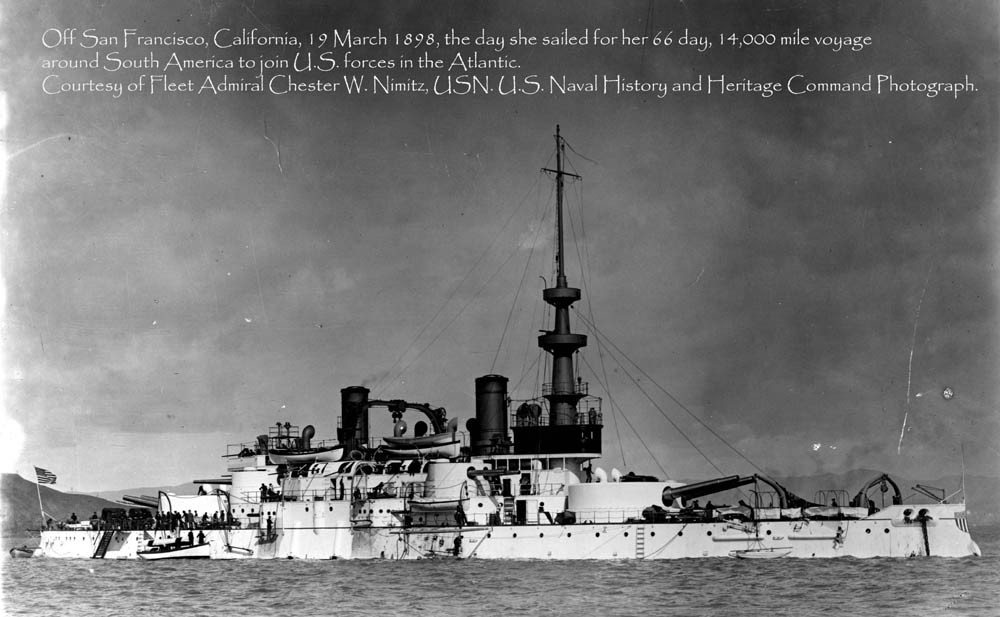
USS OREGON was laid down in San Francisco in 1891,
immediately in the wake of the publication of the
first volume of Alfred Thayer Mahan's Influence of Seapower
on History.
The Oregon was the newest man-o’-war afloat and
incorporated all the latest naval innovations. Her main
battery consisted of four 13-inch guns in double turrets
and eight 8-inch guns. The turrets were hydraulically
operated, while those on her sister ships were powered
by steam. An armored belt, 18 inches thick, ran
two-thirds the length of her hull at the waterline.
On February 15, 1898, after the armored cruiser USS
Maine blew up in Havana, USS OREGON raced from the
Pacific to the Atlantic. Oregon carried a crew of
30 officers and 438 men. The battleship rode low in the
water, being packed with 1,600 tons of coal, 500 tons of
ammunition.
At 5 in the morning of April 4, Oregon dropped anchor in
the harbor at Callao, Peru. The battleship had made a
continuous run covering 4,112 nautical miles in 16 days
from San Francisco and burned 900 tons of coal. Cruise
speed was 12 knots.
After resupplying, Captain Clark fired up the fourth
boiler on April 9, and speed was increased to 14 knots.
He ordered target practice. Empty boxes and barrels were
tossed over the side, and all guns were tested for
operating efficiency.
.jpg)
As the Oregon continued south, the weather began to
change for the worse. The heavily laden warship
continually dipped her bow into mountainous wave. At
times her deck disappeared completely under solid sheets
of water. Whenever the battleship’s bow plunged beneath
the churning sea, her propellers lifted clear of the
water and whirled around at tremendous speed, shaking
the ship like a quivering leaf.
The tension of the voyage was beginning to take its toll
on the frazzled nerves of the tired crew. One grumbling
sailor stated: “Boxes, benches, and all extra mess
chests have been stowed away. We have no place to sit
down, except on deck, and then have to let our feet hang
over the side. The men can’t seem to get enough water,
and the cook’s sourbread would make good shrapnel for
clearing the decks.”
When the Oregon neared Rio de Janeiro, the battleship
dashed ahead of the Marietta and raced for the port at
top speed. Clark anchored in Rio Harbor at 3 in the
afternoon of April 30. A dispatch boat immediately
pulled alongside the Oregon with Navy Department
telegrams. Clark was notified that the United States had
been officially at war with Spain since April 25. Oregon
had travelled 42 days!
On May 4, Oregon and her two escorts steamed out of Rio
de Janeiro. It soon became evident that the accompanying
vessels were too slow for the battleship, and Clark
worried that they would be more of a hindrance than help
in a battle. He ordered the Marietta and Nictheroy to
Cape Frio, and the Oregon headed north alone.
On May 8,
Oregon steamed into Bahia, Brazil. Captain Clark
requested permission to anchor in the harbor. He used
the excuse of “engine trouble,” and notified the port
authority that the battleship might be at Bahia for
several days. In reality, the purpose of the stopover
was to apply a fresh coat of warpaint and replenish the
ship’s coal and water supply. Clark’s comment of
“several days” was intended to deceive any Spanish
agents lurking in the vicinity.
After 68 grueling days, the odyssey of the Oregon had
finally ended on May 26. She arrived in the Cuba theater of operations
and took part in the destruction of the Spanish
Fleet at Santiago, Cuba. USS
OREGON took
actions against eight Spanish vessels in
that engagement. She was called "McKinley's
bulldog" at the battle because she appeared as a tough dog, speeding into a
fight, and the white wake off her bow was said to
appear as a "bone" clenched in her teeth.
The cruise of
the Oregon was described as “unprecedented in battleship
history, and one which will long preserve its unique
distinction.” Every American was stirred by the
excitement of the adventure, and a few expressed their
emotions in verse. John James Meehan, in his poem “The
Race of the Oregon,” wrote: “When your boys shall ask
what the guns are for, Then tell them the tale of the
Spanish War, And the breathless millions that looked
upon The matchless race of the Oregon."
Oregon’s famous
voyage had significance far beyond the part she played
in the Spanish-American War. The trip itself advertised
to the public as well as to the military, as nothing
else could have, the strategic necessity for building a
canal across the Central American isthmus. A canal would
have allowed the Oregon to steam 4,000 miles rather than
12,000. Accordingly, the United States entered into a
treaty in 1901 to build a canal, one wide enough to
accommodate battleships.
|
Click on thumbnails for more beautiful photos |
 |
 |
 |
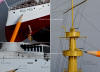 |
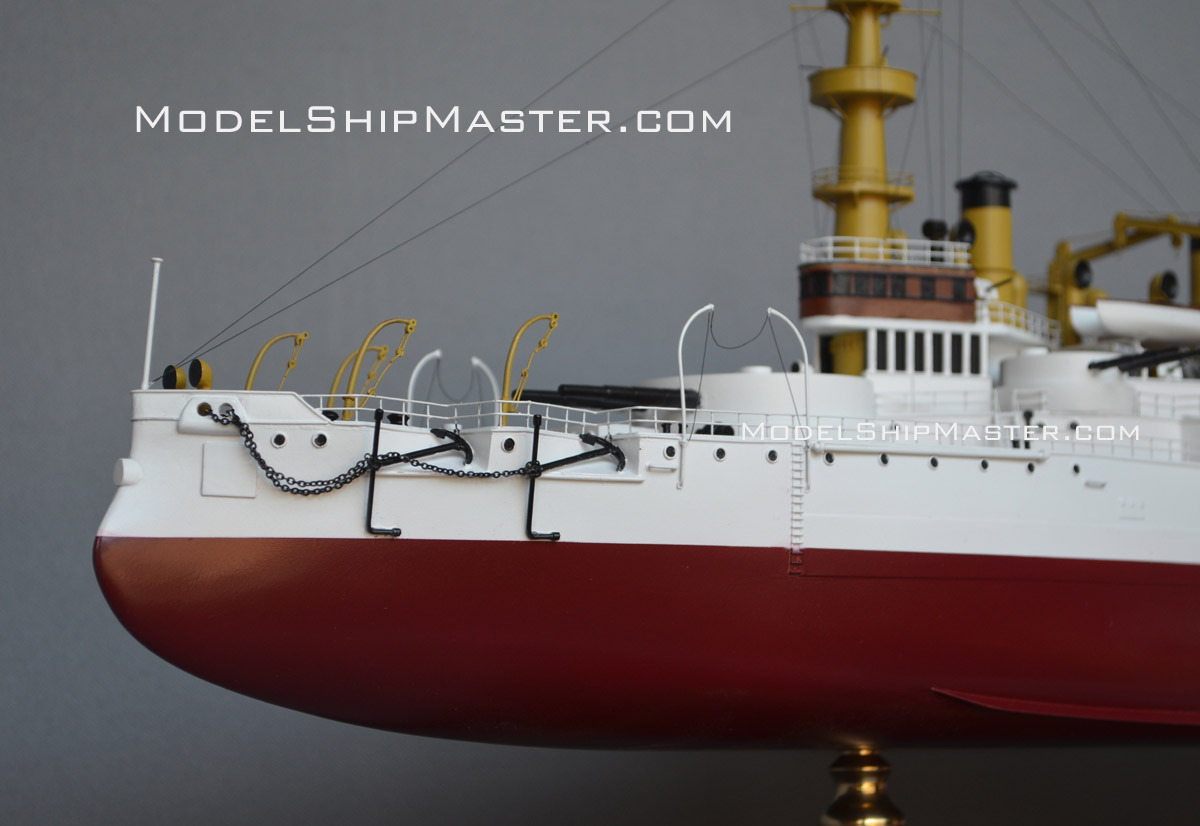
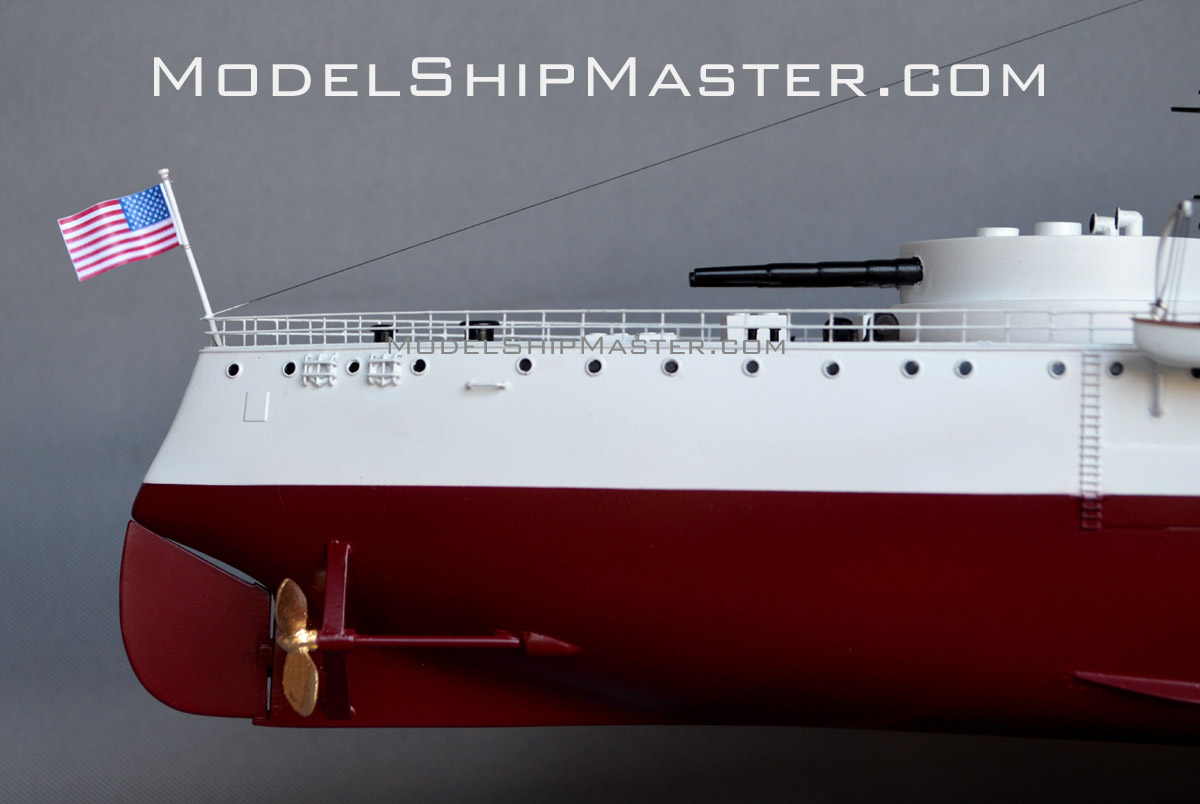
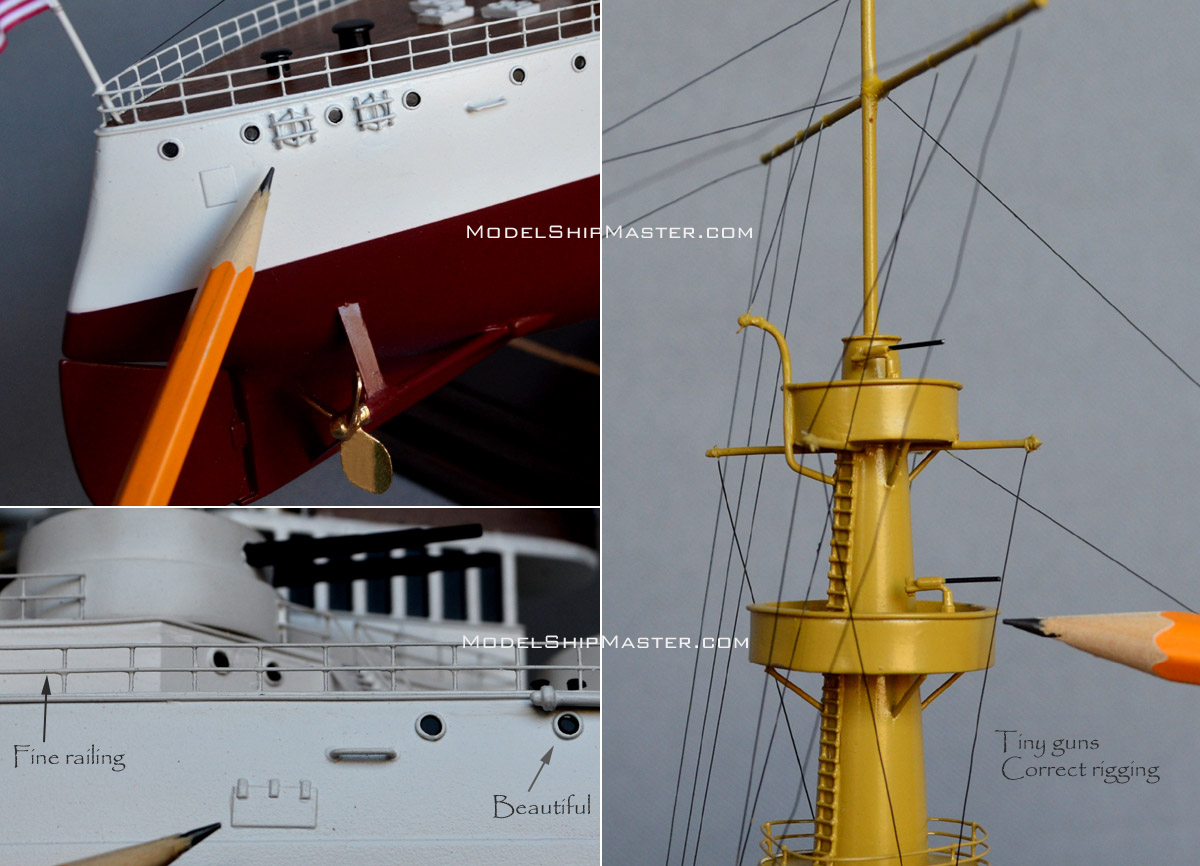
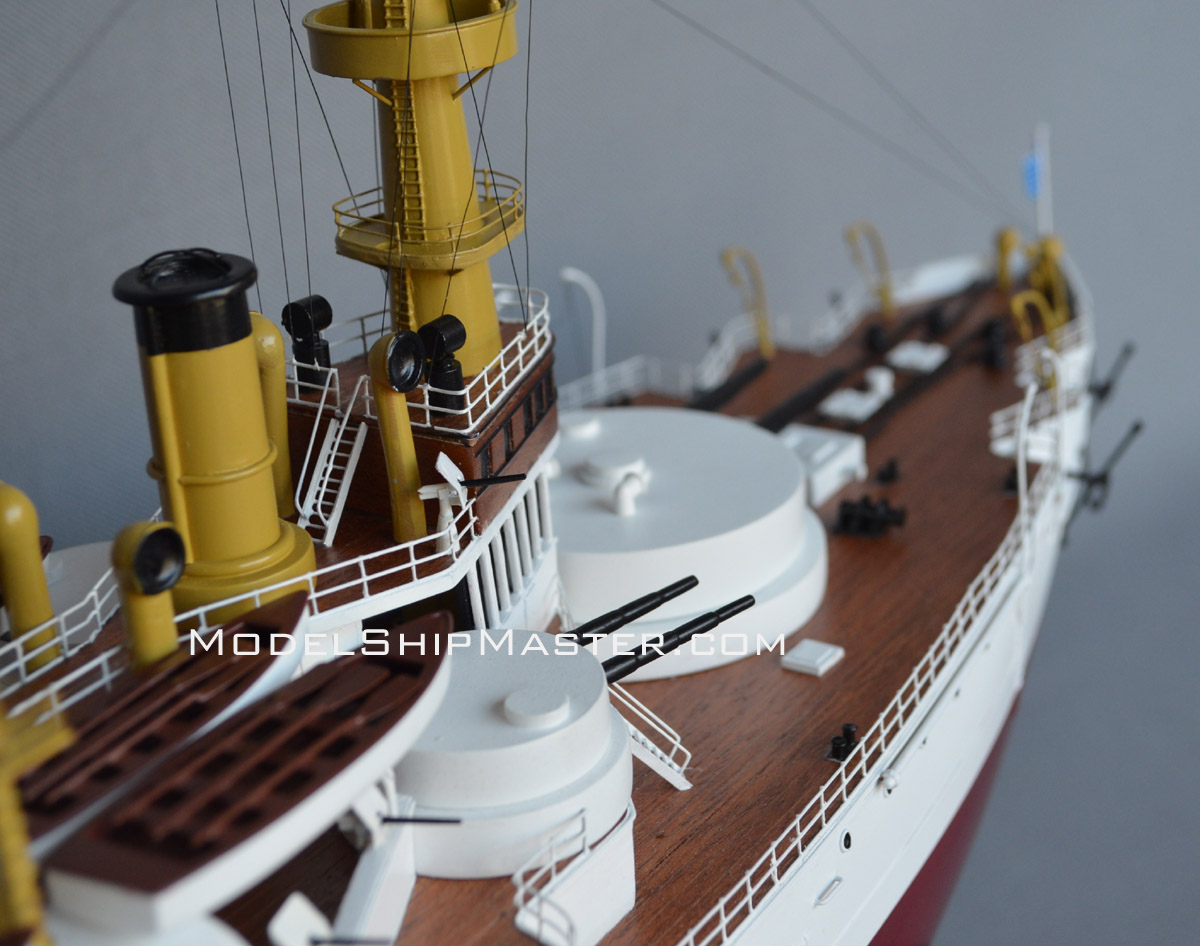
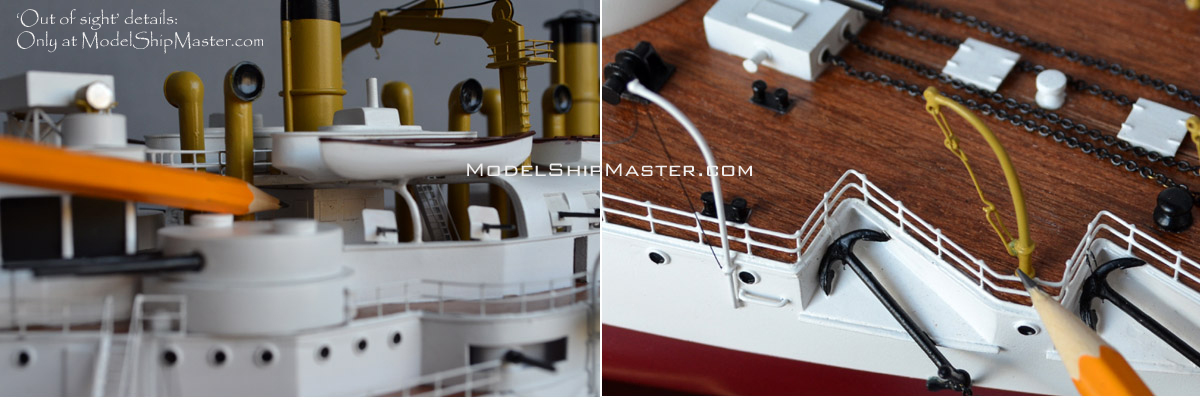
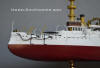
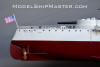
This primarily wood USS Oregon battleship model
is deadly accurate. It features:
- Beautiful teak deck, not the cheap yellowish Gemilina
- Correct hull shape,
from official plans
- Fine, to scale details
(railings, ladders, hatches...)
- Correct barrel size,
correct height for the vents
- Correct boats, correct
rigging, correct buff color
- Colors as at the time when she left San
Francisco heading for the heroic battle
30" long x 13.5" tall
x 8" wide
(1/144 scale)
$3,500
 shipping and insurance in the USA included. This
model is in stock and will be shipped within three
business days.
shipping and insurance in the USA included. This
model is in stock and will be shipped within three
business days.
20" long
(1/200 scale) $2,000
shipping and insurance in the USA
included. shipping
and insurance in the USA included. Other countries: $200 flat rate. This model is built per
commission only.
We require only a small deposit to start the process
(not full amount, not even half) to start the
process. $500
The
remaining balance won't be due until the model is
completed,
in several months.
40" long
(1/100 scale) $4,700 shipping
and insurance in the USA included. Other countries: $400 flat rate. This model is built per
commission only.
We require only a small deposit to start the process
(not full amount, not even half) to start the
process. $500
The
remaining balance won't be due until the model is
completed,
in several months.
For display case, please
click here:
Model Ship Display Case
Be aware of "34 inch Scale
1:125 Museum Quality" models of the Oregon which are
proliferating on the Internet. At first look they seem
to be good but they are so wrong. The superstructure is
so high that a real ship like that would capsize from a
breeze. The boats have ridiculous shapes. Railings and
many other features are grossly oversized. Rigging is so
wrong. There are more but it doesn't deserve our time to
list them here. These models are from one manufacturer
who uses lots of precast resin parts and cheap unskilled
labor to assemble them then ship them by containers to
the US. We feel sorry for those who rushed to buy those
"museum quality" models.
And click to check out our beautiful
Spanish American warship models
USS Olympia and
USS Maine.
Learn more about the USS
Oregon here:
https://en.wikipedia.org/wiki/USS_Oregon_(BB-3)
|